Of all PECTAA’s departments, the Assessment and Examination unit is the one families interact with most — even if they never hear its name. Every school-based assessment your child sits through the year, and the big centre-based Grade 5 and 8 exams each spring, are designed and run by this unit under the Academics wing. Here is what it does, the systems it has built, and the assessment calendar it follows.
What This Unit Does
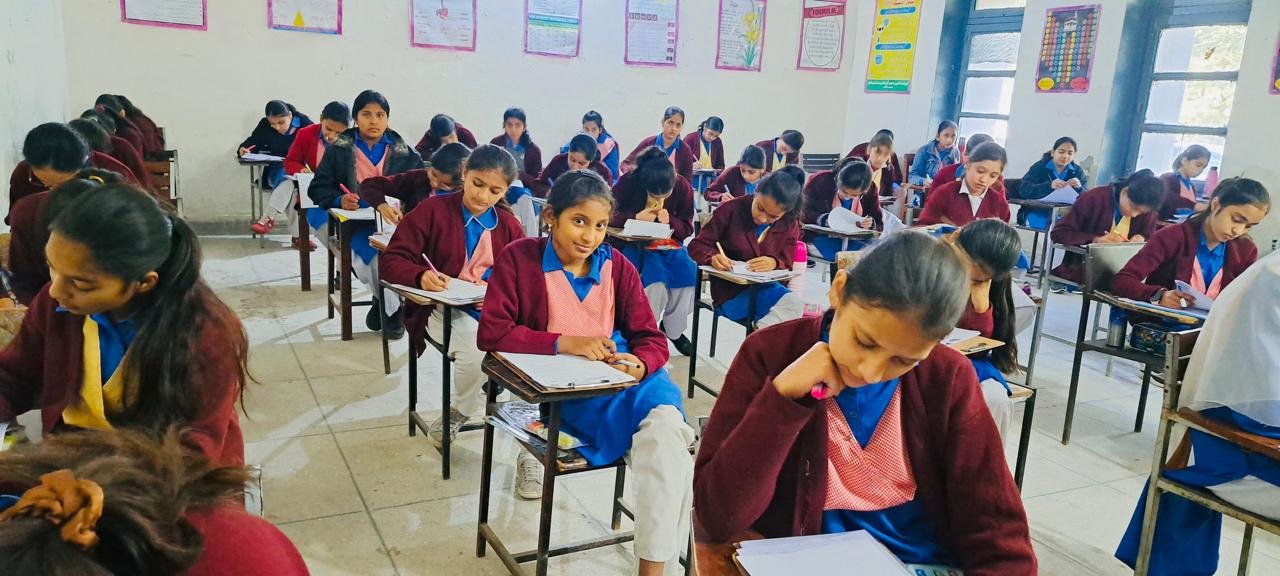
PECTAA’s assessment mandate covers students from Grades 1 to 8 across Punjab’s public schools — much wider than most parents realize. The unit’s job splits into two layers. Through the year, it runs School-Based Assessments (SBA): instead of sending papers from Lahore, it provides schools with item banks, guidelines and structured tools so schools can generate their own standardized question papers and assess students locally. Then, at the end of the session, come the formal centre-based examinations for Grade 5 and Grade 8 — the board exams whose results you check on this website.
The design philosophy, in the authority’s own framing, is to move past rote memorization: papers increasingly test critical thinking and problem-solving rather than reproduction of the textbook. Whether that shows in your child’s actual question paper is worth judging yourself — compare a recent paper with one from the old PEC era and the shift in question style is noticeable.
The Systems Behind the Exams — Decoded
The unit’s official material is full of abbreviations. Here is what each one actually means:
How a School Year of Assessment Works
The 2025–26 session gives a clear picture of the unit’s working rhythm — useful for knowing what to expect each year. In early December, PECTAA uploaded its item bank and directed all schools to generate question papers through the IBS. The Combined School-Based Assessment ran from 8 to 19 December 2025, with marking and report-card preparation completed by 20 December, and results shared with parents at a Parent-Teacher Meeting on the first working day after winter holidays. The session then closed with the year’s main events:
- Combined-Term AssessmentsDecember — school-based, generated through the Item Bank System
- End-of-Year Term AssessmentMarch — the closing school-based assessment of the session
- Grade 5 & Grade 8 ExaminationsMarch — centre-based board exams in four subjects: English, Urdu, Mathematics and Science, conducted across Punjab; results follow in April
Reform Initiatives
Item Bank System (IBS) — the quiet game-changer
Before IBS, assessment papers were either fully centralized (one leaked paper compromised everyone) or fully school-made (quality varied wildly). The item bank splits the difference: PECTAA controls question quality centrally, but each school generates its own paper. For parents, the practical effect is that your child’s school test now draws from the same quality pool as every other school in Punjab.
FLN and AEU Assessment Reforms
The Assessment and Examination Unit has aligned its early-grade tools with the foundational literacy and numeracy agenda — the recognition that testing Grade 3 children on comprehension is pointless if they cannot yet read fluently. Early-grade assessments now focus on catching reading and arithmetic gaps while they are still fixable.
Assessment Policy Framework (APF)
An initiative of the School Education Department, the APF is the rulebook the unit operates under — defining the assessment calendar, the split between school-based and centre-based testing, and how results feed back into teaching. It is the reason the December-March assessment rhythm looks the same across all 36 districts.
GCED — Global Citizenship in Assessments
The newest reform thread: embedding competency-based and scenario-based questions that assess ethical reasoning, tolerance and civic engagement alongside academics, in line with the UN’s SDG 4.7. Expect to see more “what would you do in this situation” style questions in papers over the coming sessions.
From PEC to PECTAA — What Changed in Assessment
The old Punjab Examination Commission focused on elementary-level assessment, and its exams stopped altogether in 2020. PECTAA, since its inception in March 2025, has both revived and widened that mandate: assessments now span Grades 1–8, the Grade 8 examination is back as a proper centre-based board exam, and the whole system runs on digital infrastructure (IBS) that PEC never had. The first full exam cycle under the new system — March 2026 papers, 9 April 2026 result — went off largely on schedule, which for a first attempt at this scale is worth noting.